Leave Your Message

2026 How to Optimize Pilot Scale Manufacturing for Efficiency and Growth?

Pilot Scale Manufacturing is a crucial step in the transition from laboratory to full-scale production. Recent reports indicate that optimizing this scale can yield efficiency gains of up to 30%. Effective strategies during pilot scale production can significantly impact growth. According to Dr. Emily Chen, a leading expert in the field, “Efficiency in pilot scale can save companies both time and resources.”

The process is not without its challenges. Many companies face bottlenecks that hinder progress. Data shows that nearly 40% of pilot projects exceed budget due to inefficiencies. This highlights the need for continuous improvement. Techniques such as lean manufacturing and process automation are becoming essential. They require a careful balance between innovation and operational control.

Moreover, successful pilot scale manufacturing demands a strong focus on quality control. Companies often overlook this crucial aspect, leading to quality discrepancies. Maintaining consistent quality can be difficult but critical for scaling up operations. Companies must reflect on their current methods. Continuous evaluation and adaptation are vital for success.

2026 How to Optimize Pilot Scale Manufacturing for Efficiency and Growth?

Understanding the Importance of Pilot Scale Manufacturing in 2026

2026 How to Optimize Pilot Scale Manufacturing for Efficiency and Growth?

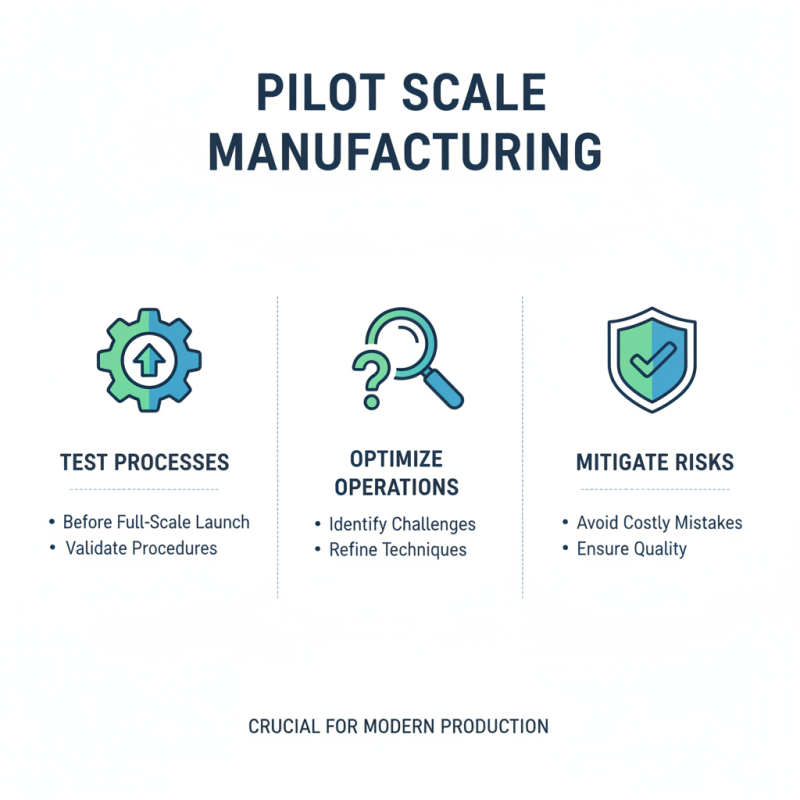
Pilot scale manufacturing plays a crucial role in modern production. It allows businesses to test processes before full-scale launches. This stage helps identify potential challenges and optimize operations. Many companies overlook the significance of pilot runs, leading to costly mistakes later.

Efficiency is key to success. One effective tip is to streamline communication within the team. Regular updates can minimize misunderstandings. This can lead to a smoother workflow. Additionally, focus on data collection during pilot runs. Gathering information early allows for informed decisions.

Don’t shy away from failure. It’s a part of growth. Learn from what goes wrong. Analyze why certain processes didn’t meet expectations. Reflecting on setbacks can foster innovation. Embracing this can ultimately lead to significant improvements. Adjusting your strategy based on pilot feedback is essential for long-term success.

Key Strategies for Enhancing Efficiency in Pilot Scale Operations

Optimizing pilot scale manufacturing can significantly impact efficiency and growth. Companies often struggle with operational bottlenecks. Streamlining processes is crucial. This can lead to increased output and reduced costs.

One effective strategy is refining workflows. Analyze each step. Identify redundancies or delays. Adjust the steps accordingly. Implementing lean manufacturing principles often helps. Aim to minimize waste and enhance productivity. Regularly revisit these processes. They may require tweaks over time.

Tips: Invest in training your team. Well-trained staff can adapt quickly. Encourage open communication. Allow employees to voice concerns. This can uncover hidden inefficiencies.

Another key area is data utilization. Collect and analyze production data. This can reveal patterns and areas needing improvement. Use software tools that can visualize this data. If data is unclear, it can lead to poor decision-making. Regularly assess the effectiveness of your data strategies. It’s important to adapt, or potential growth may be missed.

2026 Pilot Scale Manufacturing Efficiency Metrics

Integrating Technology and Automation in Pilot Scale Manufacturing

2026 How to Optimize Pilot Scale Manufacturing for Efficiency and Growth?

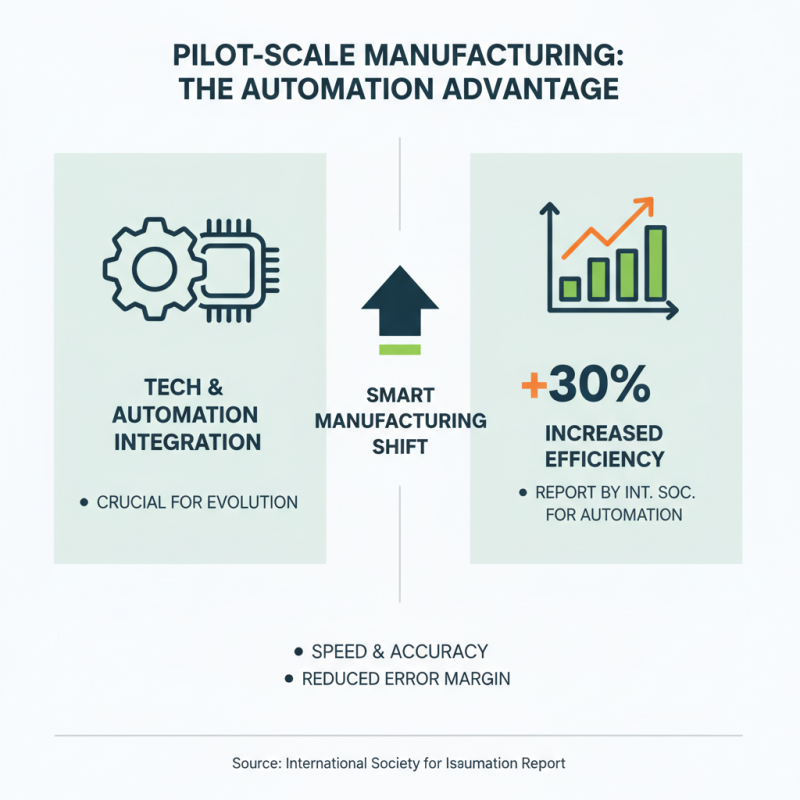
In the rapidly evolving landscape of pilot scale manufacturing, integrating technology and automation is crucial. According to a recent report by the International Society for Automation, companies that utilize advanced automation techniques report a 30% increase in efficiency. The shift towards smart manufacturing has been significant. It's not just about speed but also accuracy. Automated systems reduce the margin for error in production processes.

However, many businesses still struggle with implementation. A survey indicated that 45% of manufacturers do not fully leverage automation. This gap can lead to inefficiencies, affecting growth potential. For instance, while some firms integrate real-time data analytics, others remain reliant on outdated practices. It’s imperative to recognize that technology can only enhance operations if fully embraced.

Moreover, the financial implications are profound. Industry data shows that companies investing in automation technologies often see returns of up to 25% within three years. Yet, companies face challenges. Resistance to change, training deficits, and upfront costs all pose significant hurdles. Reflecting on these issues can guide factories towards adopting an effective growth strategy. Ultimately, maximizing pilot scale manufacturing relies heavily on embracing innovative solutions.


Streamlining Supply Chain Management for Growth in Pilot Scale Projects

In any pilot scale project, supply chain management plays a crucial role in driving growth. Recent industry reports indicate that efficient supply chain strategies can lead to a 20% reduction in production costs. This efficiency does not happen by accident; companies must carefully streamline their processes.

One common challenge is miscommunication between teams. Complications can arise when different departments are not aligned on goals. For instance, 45% of pilot scale projects suffer delays due to logistics issues. These delays can be costly and impact overall project timelines.

To avoid such pitfalls, regular check-ins and updates are vital. Implementing an integrated software solution can facilitate better communication. Many businesses report increased productivity by up to 30% after deploying such tools. However, adopting new systems requires training, which can lead to temporary setbacks and resistance among staff. Adopting a clear strategy for change management is essential, even if it poses initial challenges.

Measuring Success: KPIs for Optimizing Pilot Scale Manufacturing

Measuring the success of pilot scale manufacturing requires a clear set of KPIs. Efficiency metrics can reveal weaknesses in the process. Studies indicate that 70% of companies don’t optimize their pilot stages effectively. This underutilization leads to missed growth opportunities.

One critical KPI is yield percentage. A recent report highlighted that a 10% increase in yield could boost overall profits by up to 25%. Tracking cycle time is equally important. Companies need to monitor how long each batch takes. A delay of even a few days can significantly impact project timelines.

Another area to reflect on is waste. Some manufacturers reported waste rates exceeding 30%. This is unacceptable in a competitive landscape. Addressing these inefficiencies can unlock new potentials. Regular audits and assessments can help identify problem areas. The path to optimizing pilot scale manufacturing lies in understanding and improving these key metrics.